The 11:15 PM Showroom Lie Every First-Time Buyer Falls For
> Quick Answer: Crossing 100,000 km in Kenya is not a mechanical death sentence — it is simply a routine maintenance milestone on a Japanese manufacturer's service schedule. At 100,000 km, rubber timing belts (catastrophic engine failure if broken), CVT transmission fluid (KSh 250,000 gearbox shudder), shock absorbers, brake discs, and suspension bushings all reach the end of their design lifespan — typically KSh 55,500 to KSh 111,000 of due service. Because superstitious buyers avoid 100k-km cars, savvy Kenyan buyers negotiate KSh 150,000 to KSh 300,000 discounts on genuine 100k-km units.
It is 11:15 PM after an exhausting day at work. You are scrolling through Jiji, Cheki, or Facebook Marketplace when you spot a pristine, silver 2015 Toyota Fielder or Honda Fit listed at KSh 1,250,000. The paint shines under the showroom lights like a mirror.
Then your eyes hit the odometer reading in the spec sheet: 104,210 km.
Instantly, a cold wave of dread hits your chest. Your mind flashes to the horror stories you have heard over drinks: *"Gari ikipita 100,000 km, hiyo ni chuma ya lami! Engine inaanza kukula oil, gearbox inaanza ku-shake, na utaishi garage!"*
So you skip the listing and keep swiping until you find a "clean" 2016 unit showing 58,000 km for KSh 1,420,000. You pay a deposit, sign the papers, and drive it home thinking you bought peace of mind.
Ninety days later, disaster strikes.
Your 58,000-km "gem" starts shuddering violently at 70 km/h on Thika Road. The CVT fluid is pitch-black and burnt. The front shock absorbers are leaking oil onto the brake calipers. And when your mechanic hooks up a diagnostic scanner, he uncovers the brutal truth: the digital odometer was rolled back from 168,000 km in a back-alley yard before the car left the port!
Meanwhile, that 104,000-km Fielder you walked away from? It had a stamped Japanese service booklet, fresh CVT fluid, a brand-new timing belt, and an owner who serviced it every 5,000 km. It is currently driving smoothly to Mombasa without a single hiccup.
Here is the secret nobody in the car yards will tell you: 100,000 km is NOT a mechanical death sentence. It is simply a milestone on a maintenance calendar. In Kenya's severe driving conditions, a well-documented 100,000-km car with a complete service history will outlast an abused, low-mileage, clocked lemon 10 times out of 10.
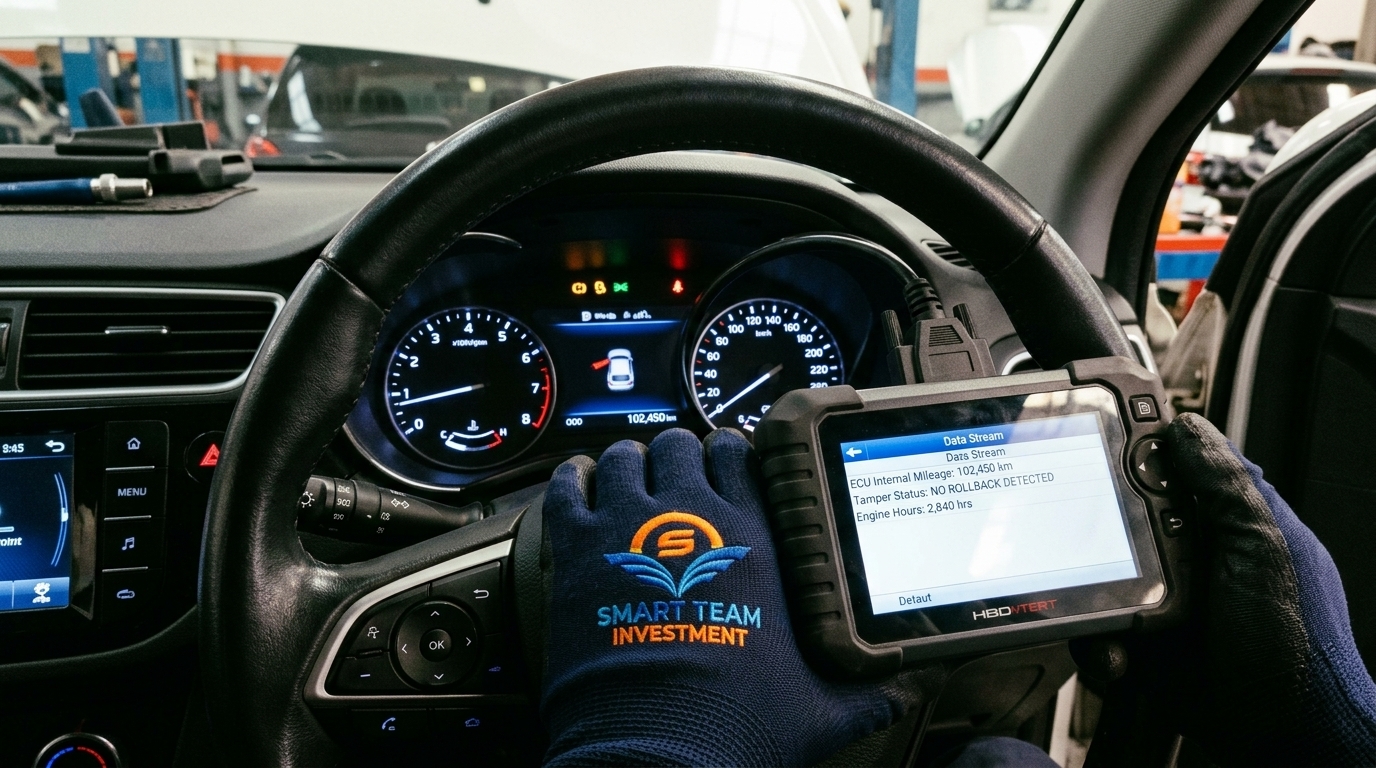
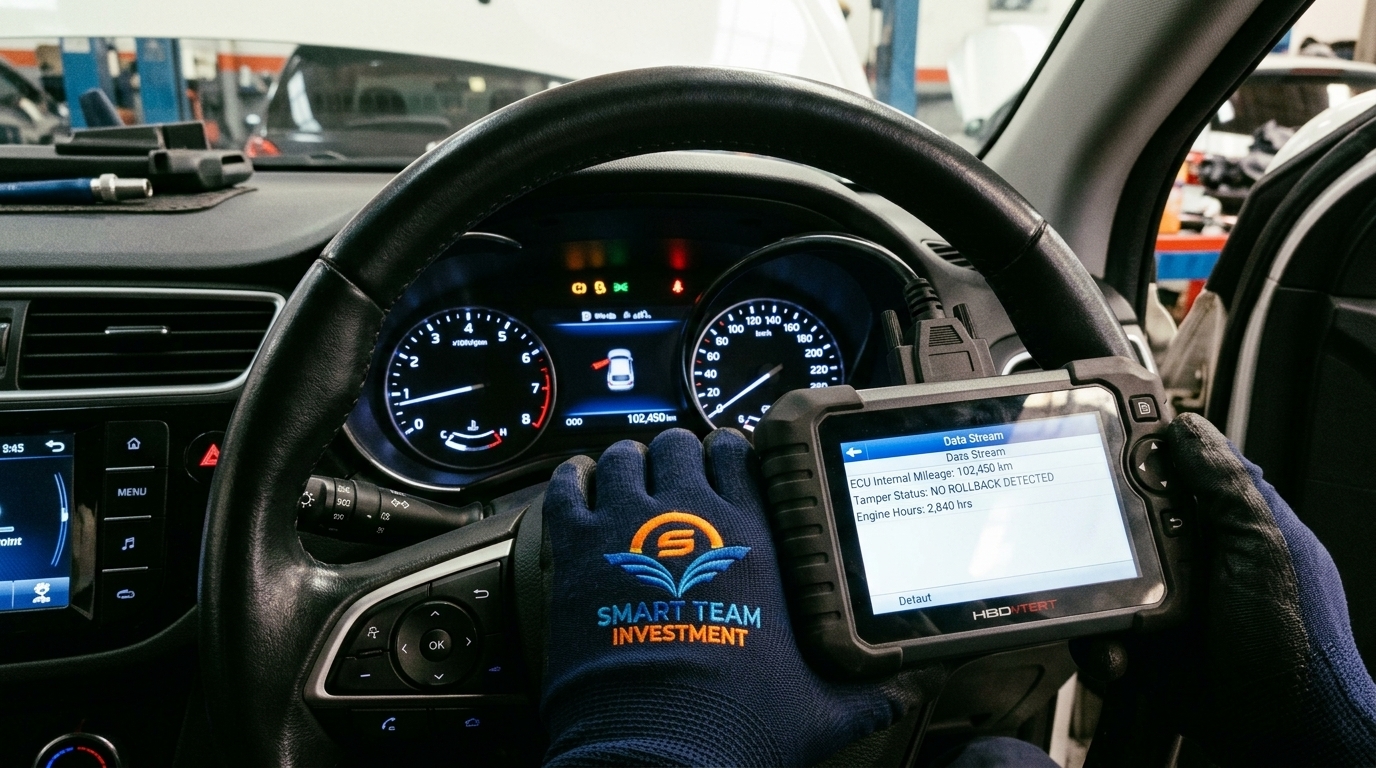
The Odometer Honesty Crisis: How to Spot a Clocked 100k-km Unit
Before you analyze a 100,000-km reading, you must answer one crucial question: Is that 100,000 km real, or is it a digital fairy tale?
Digital odometer rollback in Nairobi and Mombasa is cheap, fast, and rampant. Unscrupulous brokers routinely take 150,000-km Japanese imports, wipe 70,000 km off the digital cluster in 15 minutes, and stick a *"Lady Driven / Low Mileage, I Swear"* label on the windscreen.
To protect your hard-earned savings, run every vehicle through this 3-step forensic truth gauntlet:
1. The Japanese Auction Sheet Audit: Cross-check the cluster reading against the official Japanese export auction sheet. If the auction sheet says Grade 3.5 with 142,000 km but the dashboard says 82,000 km, walk away immediately. (Read our Evaluating Japanese Auction Sheet Grades Guide to decode these sheets). 2. The Physical Wear-and-Tear Mirror: Car interior plastics do not lie. A car showing "50,000 km" with a smooth, polished steering wheel, worn-down rubber brake pedals, and sagged driver-seat bolsters has actually done over 140,000 km. 3. The Service Booklet Trail: Genuine Japanese imports carry a service booklet with Japanese dealer maintenance stamps at regular intervals (e.g., 10k, 30k, 50k, 80k, 100k km). No stamps = zero proof.
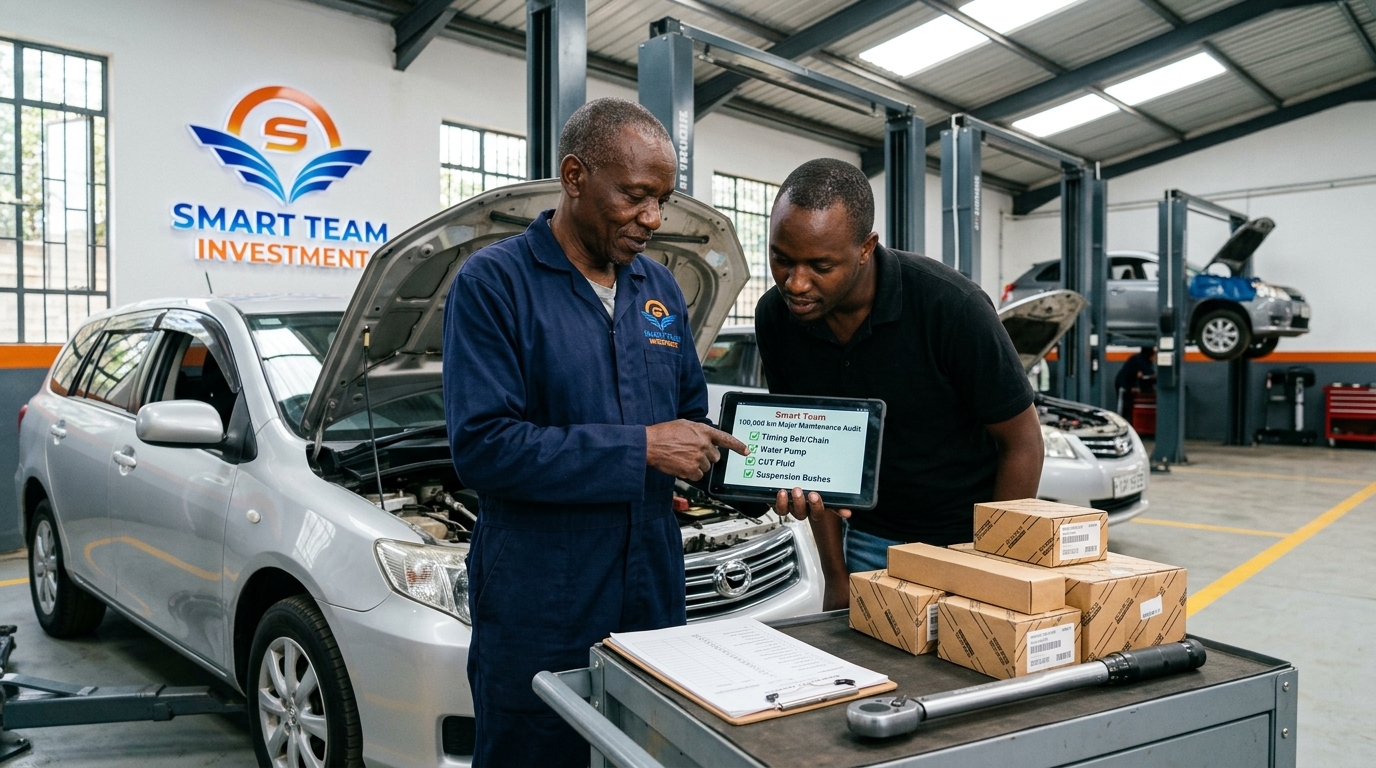
What ACTUALLY Happens to Car Parts at 100,000 km?
When a Japanese car crosses the 100,000 km mark, specific consumable components reach the end of their design lifespan. This is not structural failure — it is natural wear.
If you know what comes due, you can use these items to negotiate KSh 50,000 to KSh 150,000 off the dealer's asking price!
### The 100,000-km Vehicle Wear & Maintenance Diagnostic Matrix
| Mileage Milestone | Wear Item / Component Due | What Happens If You Ignore It? | Real Repair Outflow (KSh) |
|---|---|---|---|
| 30,000–40,000 km | Engine Oil & Filter, Air/Cabin Filters, Front Brake Pads | Increased engine wear, sluggish acceleration, brake grinding | KSh 8,000 – KSh 18,000 |
| 60,000 km | CVT / Automatic Transmission Fluid, Radiator Coolant, Spark Plugs | CVT Gearbox Shudder & Failure. (The KSh 250,000 Jatco CVT trap) | KSh 15,000 – KSh 35,000 |
| 80,000–100,000 km | Front/Rear Shock Absorbers, Brake Discs, Suspension Bushings, Ball Joints | Knocking sounds over potholes, uneven tire wear, unstable highway handling | KSh 35,000 – KSh 80,000 |
| 100,000 km (CRITICAL) | Timing Belt & Water Pump (if belt-driven engine), Thermostat | Engine destruction if the belt snaps mid-drive (bent valves) | KSh 25,000 – KSh 50,000 |
| 100,000+ km | Alternator Brushes, Starter Motor, Hydraulic Engine Mounts, Drive Hoses | Engine vibration at idle, unexpected non-start at petrol stations | KSh 20,000 – KSh 60,000 |
> 💡 Related Reading: For the engine and transmission sanity checks that pair with this maintenance math, see Top 5 Mechanical Points to Check on Kenyan Roads and Can KSh 1 Million Buy You a Good Car in Kenya in 2026?.
Interactive Tool: 100,000-km Maintenance & Repair Cost Estimator
Before you pay a holding deposit or sign a proforma invoice on any import showing 80,000–150,000 km, run the odometer reading and timing mechanism through the same repairs-pricing engine our team uses in buyer-side audits — and build the written 100k service list you will present to the dealer.
100,000-km Maintenance & Repair Cost Estimator
Enter the odometer reading and timing mechanism to price every 100k service item due — and build your dealer negotiation lever
Items due at 104,000 km (Nairobi workshop benchmarks)
- Engine Oil & Synthetic FiltersKSh 6,500 – KSh 12,000
- CVT Transmission Fluid FlushKSh 12,000 – KSh 22,000
- Front & Rear Brake PadsKSh 6,000 – KSh 14,000
- Front Shock Absorbers (x2) & BushingsKSh 18,000 – KSh 38,000
- Iridium Spark Plugs (x4)KSh 8,000 – KSh 16,000
- Radiator Flush & CoolantKSh 5,000 – KSh 9,000
- Timing Belt + Water Pump (belt-driven engines only)KSh 25,000 – KSh 50,000
Estimated 100k refresh cost
KSh 80,500 – KSh 161,000
Your negotiation lever: present this written estimate to the dealer and discount it from the asking price.
Timing mechanism verdict
TICKING BOMB — DEMAND KSh 35,000 OFF
Past 90,000–100,000 km with no belt-change record. A snapped belt costs KSh 120,000–220,000 to repair. Budget KSh 30,000–50,000 immediately and negotiate a KSh 35,000 discount.
Estimates use 2026 Nairobi workshop benchmarks and assume a documented service history. Copies of service booklets, QISJ inspection records, and auction sheets always beat a calculator. Need a neutral 100k-km pre-purchase audit? Send "100K AUDIT" or your target car's chassis number to +254 790 406903 on WhatsApp.
The estimator uses 2026 Nairobi workshop benchmarks for Japanese used imports. A genuine timing chain (Toyota 1NZ/2NZ, Honda L13/L15, Mazda SkyActiv) removes the biggest line item, while a rubber timing belt with no replacement record demands an immediate KSh 25,000–50,000 budget plus a KSh 35,000 price discount.
The Timing Belt vs. Timing Chain Ticking Time Bomb
At 100,000 km, there is ONE component under the bonnet that determines whether your engine lives or dies: The Timing Mechanism.
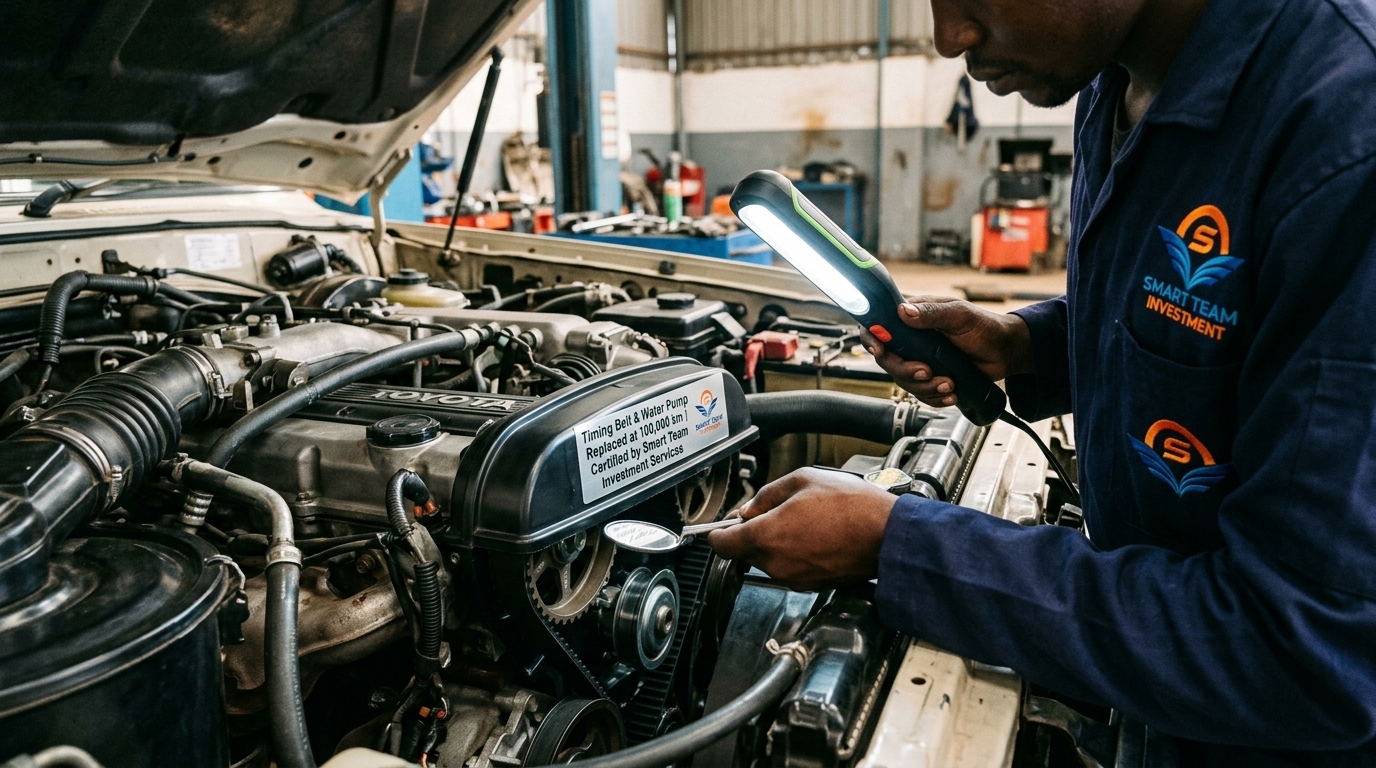
* Timing Chains (Modern Japanese Standard): Most modern Japanese petrol engines (Toyota 1NZ-FE, 2NZ-FE, Honda L13A/L15A, Mazda SkyActiv) use a heavy-duty steel timing chain. Chains are designed to last the full lifetime of the engine (250,000+ km) as long as engine oil is changed regularly. * Timing Belts (The 100k Replacement Trap): Older engines, specific diesel units, and certain European models use a reinforced rubber timing belt. Rubber degrades over time and heat. A timing belt MUST be replaced at 90,000 to 100,000 km along with the water pump.
> WARNING: If a rubber timing belt snaps while you are cruising at 80 km/h on Mombasa Road, the pistons will slam into the valves at 3,000 RPM, destroying the cylinder head instantly. Repairing a snapped timing belt engine costs KSh 120,000 to KSh 220,000 — often requiring a complete engine replacement!
How to Check at the Yard: Open the bonnet. Look at the front of the engine block. If you see a hard black plastic side cover with a factory silver maintenance sticker reading 100,000km 交換 (100k km Replacement), check if a mechanic has written a date/mileage marker. If the car is at 102,000 km and has no belt-change record, demand a KSh 35,000 price discount immediately!
Why Kenyan Road Conditions Accelerate 100k Wear
Textbook maintenance schedules are written for smooth, cool Japanese highways. Kenya is classified by global automotive engineers as a Severe Operating Environment. Three local factors shorten part lifespans by 30%:
1. Nairobi Traffic Idling (Hidden Engine Hours): Sitting in a 90-minute crawl on Uhuru Highway or Mombasa Road keeps your engine, cooling fan, and AC compressor working continuously while the odometer does not move. A car showing 100,000 km in Nairobi has the engine running hours of a 140,000-km highway car! 2. Equatorial Heat & Red Dust: Fine volcanic dust on Thika, Kitengela, or feeder roads clogs air filters and fouls engine oil twice as fast. Radiator fins get caked in mud, causing subtle overheating that warps cylinder heads. 3. Potholes & Murram Corridors: Potholes transmit sharp impacts directly into rubber suspension bushings, ball joints, and shock absorber seals, turning "tight" Japanese suspension into a clunking mess within 18 months of local use.
> 💡 Related Reading: Because Kenya's severe environment shortens service intervals, budget correctly from the start — see How Much Should You Spend on a Car Based on Your Salary in Kenya? and How to Secure Car Asset Financing in Kenya.
Why a Documented 100,000-km Car is Actually a Bidding Bargain
Smart Kenyan buyers do not run away from 100,000 km — they use it to win. Here is why:
* The Price Discount Factor: Dealers discount 100,000-km units by KSh 150,000 to KSh 300,000 compared to lower-mileage units because they know superstitious buyers avoid them. * Refreshed Consumables: A 110,000-km car that just underwent its major 100k service in Japan or Kenya has brand-new fluids, fresh brake pads, new spark plugs, and new tires. You inherit a refreshed car at a discount! * Even Mechanical Wear: Engines that run regularly up to 100,000 km suffer less internal condensation rust than "garage queens" that sat stationary in coastal humidity for 3 years with stale oil.
> 💡 Related Reading: Pair a documented 100k-km import with the right buying route — Importing vs Buying a Car Locally in Kenya or How to Buy a Car at a Bank Auction in Kenya.
The 4-Step Dealer Negotiation Formula
Itemizing upcoming 100k service is only half the battle — you must convert the list into cash off the dealer's price tag. Use the exact 4-step formula our audit team recommends:
Step 1: Inspect the vehicle and demand the full Japanese export auction sheet plus the stamped service booklet. Step 2: Identify every 100k maintenance item now due (CVT fluid, timing belt/chain, shocks, brake discs, spark plugs, tires) using the diagnostic matrix above. Step 3: Total the repair estimates using the 2026 Nairobi workshop benchmarks in our interactive estimator. Step 4: Present the written estimate to the dealer: *"Your asking price is KSh 1.3M, but KSh 80,000 in 100k maintenance is due immediately. I will pay KSh 1.22M cash today."*
Dealers who dismiss the list are the same dealers who keep their 100k-km units parked for months — walk away and let a documented unit elsewhere win your business.
> 💡 Related Reading: Before you negotiate, know how to fund the difference — see Hire Purchase vs. Bank Loan in Kenya: The KSh 165k Flat-Rate Trap and Is a Hybrid Actually Cheaper in Kenya?.
Frequently Asked Questions (100,000-km Maintenance in Kenya)
No. For modern Japanese vehicles (Toyota, Honda, Mazda, Nissan), 100,000 km is considered mid-life. Engines built after 2010 easily exceed 250,000 to 300,000 km if serviced regularly with synthetic oil. The key is ensuring the major 100k wear items — CVT fluid, timing belt/chain, shock absorbers — are maintained.
Most modern 4-cylinder Japanese engines (such as Toyota's 1NZ-FE or Honda's L15A) use steel timing chains. Look at the engine front cover: if it is metal and sealed into the engine block, it uses a timing chain. If it has a black plastic removable cover with a silver maintenance sticker (100,000km 交換), it uses a rubber timing belt that must be replaced at 90,000–100,000 km with the water pump.
Overheated or degraded CVT fluid loses viscosity, causing metallic friction between the steel belt and pulleys. This leads to acceleration shudder, slipping gears, and eventual total transmission failure — requiring a complete Jatco CVT gearbox replacement that costs approximately KSh 250,000 in Kenya.
Always confirm the current requirements on the official NTSA portal before you pay anyone, and keep the payment receipt.
The Godfather Offer: Get Your Pre-Purchase 100k-km Audit Free
Do not gamble your hard-earned KSh 1.2 Million savings on a shiny paint job or a suspicious 60,000-km cluster reading.
Before you wire a deposit or sign a financing agreement on any used import, let our team conduct a neutral, independent 100k-km Pre-Purchase Audit:
1. Auction Sheet & Mileage Verification: We pull the original Japanese auction record by chassis number to confirm exact mileage and catch rolled-back odometers. 2. 45-Point Mechanical & Diagnostic Scan: We run an OBD-II ECU computer scan, check live CVT transmission temperatures, test battery state-of-health, and inspect suspension/cooling systems. 3. 100k Major Service Cost Estimator: We calculate the exact cost of any upcoming 100k service items so you can deduct them directly from the dealer's asking price.
📲 Claim Your Free Audit on WhatsApp: Send "100K AUDIT" or your target car's chassis number to +254 790 406903 now!
*Also review our related buyer protection guides: How to Avoid Logbook Scams in Kenya and How to Buy a Car from a Kenyan Broker Without Getting Scammed.*
P.S. (TL;DR)
Here is the complete summary checklist before you step onto any Kenyan car yard:
- Documents beat digits: A verified 110,000-km car with a full Japanese service record is 10x safer than an unverified 60,000-km car.
- Check belt vs chain: Identify if the engine uses a rubber timing belt. If yes and past 90k km, budget KSh 30,000–35,000 for replacement immediately.
- CVT fluid is non-negotiable: Flush Japanese CVT transmission fluid every 40,000–60,000 km without exception to avoid KSh 250,000 gearbox replacements.
- Factor Kenya's severe environment: Shorten engine oil service intervals to 5,000–7,500 km due to Nairobi traffic idling and red dust.
- Use 100k to negotiate: Itemize worn shocks, brake discs, or spark plugs to negotiate KSh 50,000 to KSh 150,000 off the dealer's price tag.
WhatsApp "100K AUDIT" to +254 790 406903 for a Free 1-on-1 Pre-Purchase 100k-km Audit — auction sheet verification, ECU mileage audit, and repair estimate review — before a single shilling moves.
--- *Disclaimer: This guide is for educational purposes and does not constitute formal mechanical or legal advice. Maintenance timelines, part lifespans, and workshop pricing vary by model, driving conditions, and 2026 market rates. Always obtain an independent inspection report from an accredited mechanic before purchase.*
The 100,000-km Maintenance & Failure Points Cheat Sheet
What genuinely fails at 100k km, what it costs in Kenya, and the service that either saves or condemns the car.
What you will discover inside
- ✓The service items due at 100k km and their real cost range
- ✓The timing belt vs. chain difference — how to tell which you have
- ✓The failure points that make a 100k car uneconomical to fix
- ✓The odometer verification steps before you commit
- ✓How to use a written maintenance estimate as a negotiation lever
Free Download: The 100,000-km Maintenance & Failure Points Cheat Sheet
100% free. Delivered instantly to your email and WhatsApp.