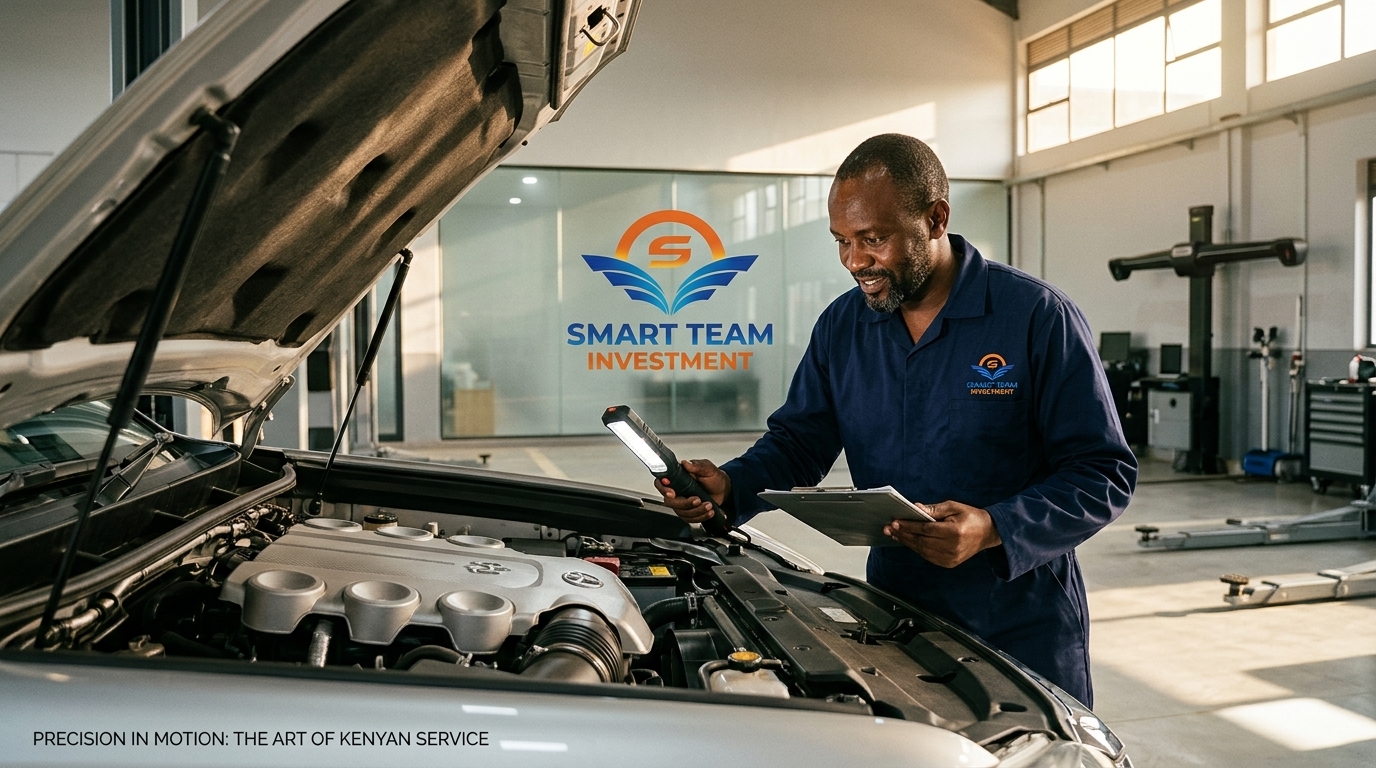
Why Mechanical Inspection Matters More Than the Sticker Price
An estimated 40% of used cars for sale in Kenya carry hidden engine, transmission, or suspension faults that cost between KSh 50,000 and KSh 200,000 to repair shortly after purchase. Furthermore, 30% to 40% of foreign imports arrive with concealed rust or past collision damage hidden under fresh body polish.
Many first-time buyers assume that a bank valuation protects them. However, a bank's valuer only assesses open market valuation for loan collateral—they do not conduct a 7-day test drive or dismantle cooling components. A vehicle can pass a bank valuation with flying colors and still leave you stranded on the Nairobi–Mombasa highway with a blown head gasket.
Kenyan driving conditions—characterized by extreme traffic heat on Thika Road, severe potholes, dusty murram roads, and high altitudes—place immense stress on automotive machinery. Before committing a deposit, inspect these five critical mechanical systems.
Pre-Purchase Inspection Cost & Risk Calculator
Estimate hidden repair risk before you pay the deposit
Hidden Fault Risk
50%
40% imports hidden faults
Potential Hidden Liability
KSh 59,150 – KSh 114,400
Cooling/suspension/CVT/rust
Inspection Cost
KSh 3,500
AA Kenya / mobile mechanic
Net Protection Value
KSh 83,275
Saved vs. KSh 200k lottery
40% of used cars carry faults KSh 50k–200k. A bank valuer checks OMV, not the engine for a week. See valuation limits vs mechanical audit.
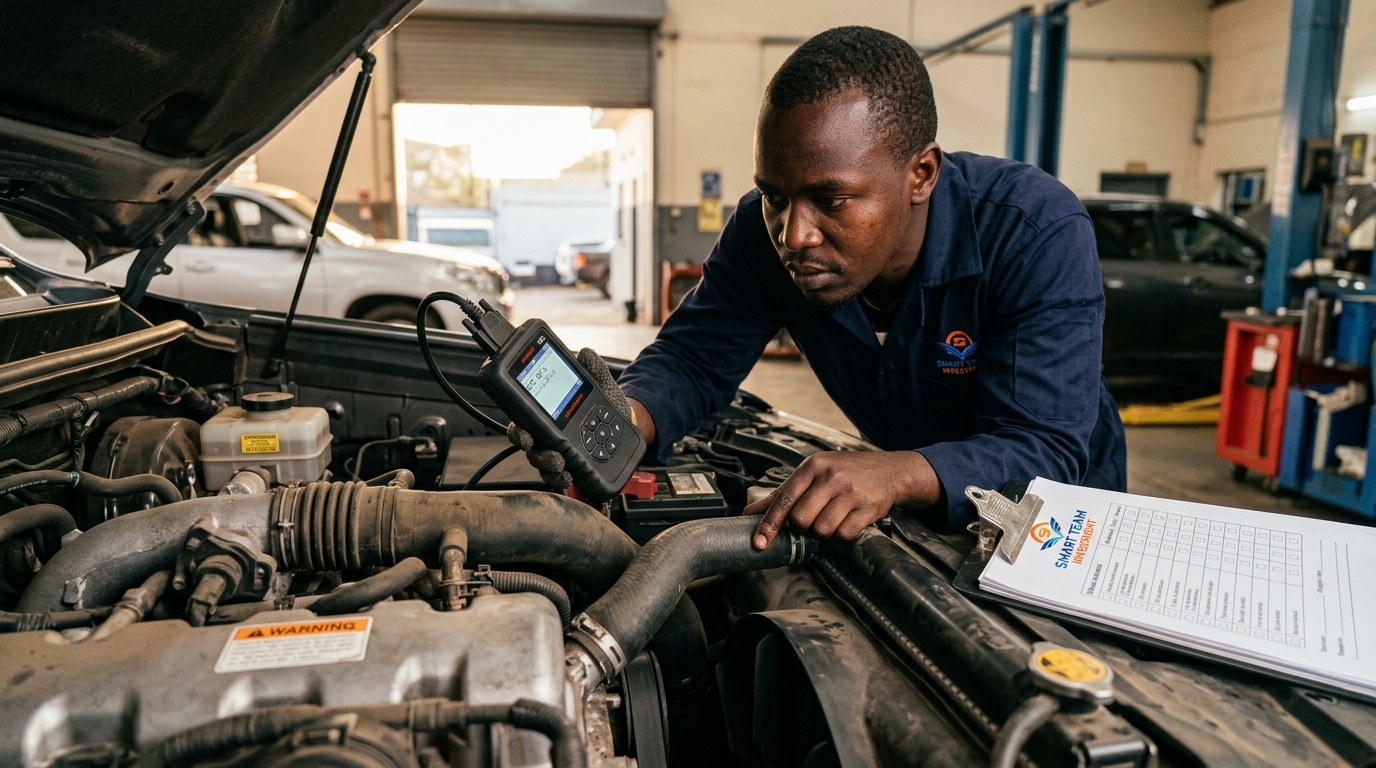
The 9 PM Eldoret-Nairobi Nightmare Nobody Puts in the Facebook Ad
Imagine this: You finally picked the machine. A sleek, shiny 2016 Toyota Fielder or Mazda CX-5 fresh off a Ngong Road yard. The paint glistens like a mirror, the interior smells like pristine Japanese cotton, and the broker swore on his mother’s grave that it’s an "accident-free, buy-and-drive lady-owned gem."
You cleared your bank financing, signed the paperwork, paid your deposit, and took off for your first upcountry weekend drive to show the folks back home.
Then, 40 kilometers past Naivasha on a steep climb at 8:45 PM, the temperature gauge suddenly spikes into the red. Steam billows from under the bonnet. The engine sputters, knocks violently, and dies.
There you sit on a pitch-black, rain-slicked highway with zero network coverage, truckers roaring past at 100 km/h, and a towing bill that’s about to eat your entire month’s emergency fund.
Here is the brutal, uncomfortable statistic every Kenyan first-time buyer must internalize: An estimated 40% of used cars on sale in Kenya carry hidden engine, transmission, or suspension faults that cost between KSh 50,000 and KSh 200,000 to fix immediately after purchase. Furthermore, 30% to 40% of foreign-used imports arrive with hidden rust, structural repairs, or clocked odometers masked by high-gloss polish and cheap showroom tricks.
Your bank’s valuer evaluates what the car should be worth on paper to protect the bank's loan. He does not test-drive the car for a week. A vehicle can easily pass a bank valuation and still strand you on day two with a warped cylinder head or a destroyed CVT gearbox.
Before you hand over a single shilling in deposit, here are the 5 non-negotiable mechanical checkpoints you must run on Kenyan ground.
1. The Cooling System: The #1 Engine Killer on Kenyan Roads
Overheating is the leading cause of catastrophic engine failure in Kenya. Bumper-to-bumper traffic jams in Nairobi, combined with high ambient temperatures in Mombasa and steep climbs like the Limuru escarpment, push cooling systems to their absolute limits.
Common root causes include low coolant levels, clogged radiators, failing water pumps, and degraded rubber hoses. Driving an overheating vehicle even for a few minutes can warp the cylinder head or blow a head gasket—repairs that frequently exceed KSh 100,000.
Cold-Engine Inspection Checklist
- Cold Start Observation: Always inspect the vehicle when the engine is completely cold. Turn the key and verify that the dashboard temperature gauge climbs slowly and settles directly in the middle.
- Coolant Quality & Level: Check the expansion tank. Coolant should be clean (red, pink, or green) and filled to the indicator mark. Never buy a car filled with plain tap water, as tap water causes internal rust and mineral blockage.
- Oil-in-Coolant Test: Inspect under the radiator cap and oil filler cap. A milky, frothy residue (resembling mayonnaise) indicates coolant mixing with engine oil—a classic sign of a blown head gasket.
- Radiator Fin Inspection: Examine the front radiator grill for bent fins, mud build-up, or active fluid leaks.
- Exhaust Smoke Analysis: Persistent white smoke billowing from the tailpipe during idling signifies burning coolant inside the combustion chamber.
> WALK-AWAY TRIGGER: White exhaust smoke, milky residue under the oil cap, or a temperature needle that creeps past the 50% mark during a 10-minute test drive. Do *not* negotiate—find another unit.
*How to Audit (Before Turning the Key): Cold Start Inspection — reservoir clean pink/green/blue not rusty brown; Head Gasket Oil Test — creamy mayonnaise under filler cap = walk away; Radiator Hose Squeeze — pliable firm not rock-hard cracked; Exhaust Smoke — white sweet coolant, blue burning oil, black excess fuel; Clogged Fins — bent/packed murram clay = cannot shed heat. Cost of failure KSh 120k–250k warped head.*
2. Suspension and Steering: Defeating Kenya’s Potholes
Foreign-used Japanese imports are designed for smooth asphalt. Within 12 to 24 months of encountering Kenyan speed bumps, rough murram, and unpaved roads, factory suspension components begin to deteriorate.
Worn shock absorbers, damaged ball joints, cracked control arm bushings, and loose steering racks are the most frequent mechanical defects found in locally driven cars.
| Physical Symptom | Likely Mechanical Fault | Estimated Repair Cost |
|---|---|---|
| Car bounces >3 times | Worn / Leaking Shock Absorbers | KSh 18,000 - KSh 35,000 |
| Clunking over speed bumps | Cracked Control Arm Bushings | KSh 8,000 - KSh 15,000 |
| Screeching on full turn | Failing CV Joints / Boots | KSh 12,000 - KSh 22,000 |
| Vehicle pulls to one side | Misalignment / Tie Rod Wear | KSh 3,500 - KSh 10,000 |
| Uneven inner tire wear | Sagging Springs / Camber Fault | KSh 25,000 (Tires) |
Essential Suspension Tests
- The Corner Bounce Test: Push down firmly on each corner of the vehicle and release. The body should rebound once and settle. If it continues bouncing two or three times, the shock absorbers are worn out.
- Visual Leak Inspection: Look behind each wheel for oil residue leaking down the shock absorber body.
- Rough Road Test Drive: Drive over a bumpy section of road at low speed with the windows down. Listen carefully for metallic clunks, squeaks, or rattling noises.
- Steering Play: Turn the steering wheel gently while parked. Excessive play (more than 15 degrees of movement before the wheels turn) points to worn tie rod ends or a failing steering rack.
- 3-Bounce Test: Stand at each corner, press full weight, release — should settle in 1–2 bounces; 3–4 bounces = dead shocks. Check tire tread inner/outer uneven = alignment/bent arm KSh 32k–60k tires.
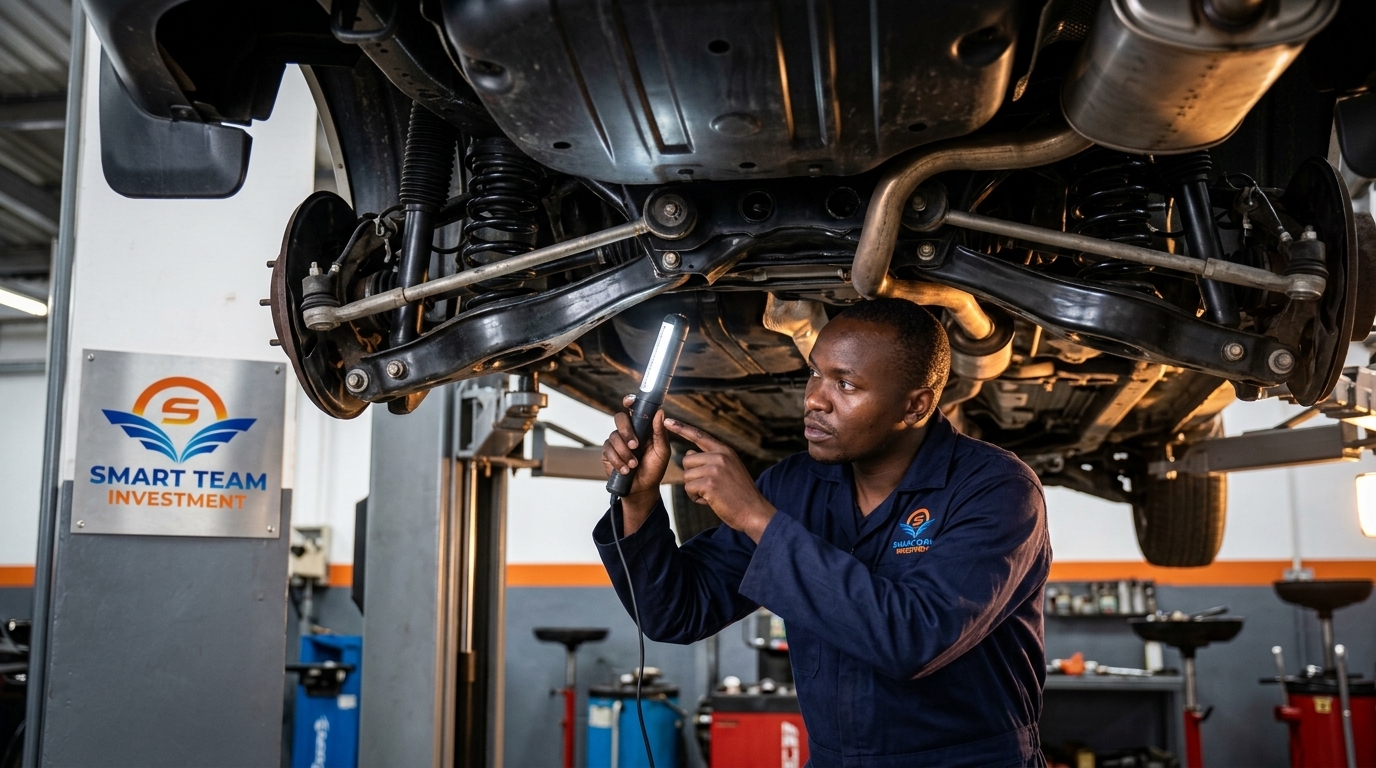
3. Brake Systems: Non-Negotiable Safety Inspections
Brake failures are the single most common defect discovered during independent vehicle audits in Kenya. Defective brakes are extremely dangerous on high-speed highways like the Nairobi–Nakuru highway or steep terrain.
> Safety Rule: Never compromise on brake integrity. If a seller promises to "fix the brakes after you pay," refuse the arrangement. Require a complete brake overhaul or deduct the repair cost from the purchase price.
Step-by-Step Brake Checklist
- Pedal Firmness: Press the brake pedal firmly while stationary with the engine running. The pedal should feel rock-solid. If it feels spongy or slowly sinks to the floor mat, there is air in the lines or a leaking master cylinder.
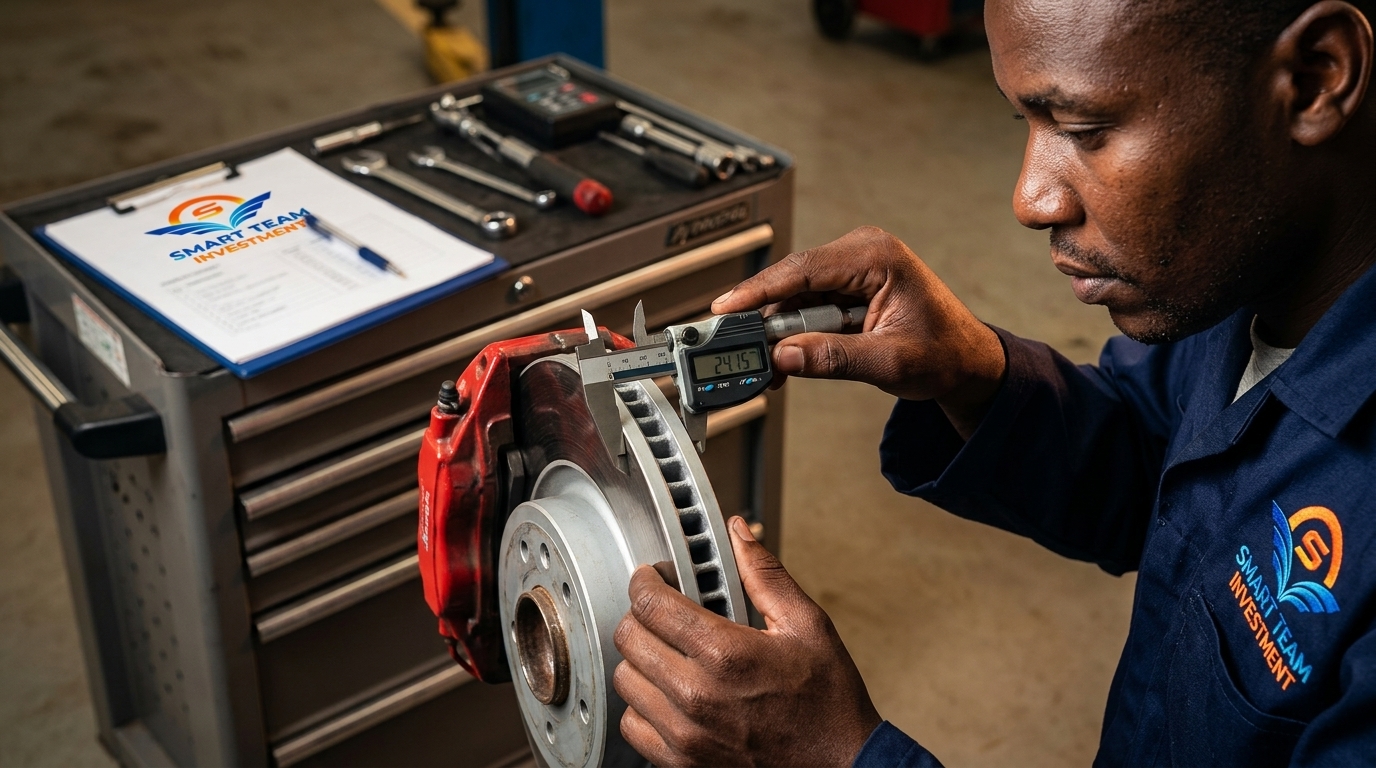
- Brake Pad Thickness: Look through the wheel spokes. Brake friction pads must have at least 4mm of lining remaining. Less than 3mm requires immediate replacement.
- Rotor Disc Surface: Check the metal brake discs for deep grooves, scoring, or a lip at the outer edge. Pulsating vibrations through the pedal when braking from 60 km/h indicates warped rotors.
- Handbrake / Parking Brake: Engage the handbrake on a slope. It should hold the vehicle firmly within 4 to 6 ratchet clicks. Also test: engine off pump pedal 3 times — should become rock-hard; spongy or sinking = air/leaking master cylinder; peer through rim spokes pads ≥4–5mm; finger cold disc deep grooves/ridges rust lip = replace rotors; 60 km/h firm brake shudder = warped discs, pull left/right = seized caliper.
*For logbook-verified cars with clean history, see How to Avoid Logbook Scams in Kenya and NTSA TIMS & T-Port Logbook Transfer Guide.*
4. Engine & Transmission: Avoiding KSh 200,000 Overhauls
Engine overhauls and automatic transmission replacements represent the most expensive surprise repairs in the Kenyan used car market, routinely costing between KSh 60,000 and KSh 250,000.
Exhaust Smoke Color Guide
Exhaust emissions reveal critical internal engine health:
- Blue Smoke: Indicates the engine is burning oil due to worn piston rings, valve stem seals, or a blown turbocharger seal. Requires an expensive engine rebuild.
- Black Smoke: Indicates excessive fuel consumption (running rich), caused by dirty fuel injectors, a clogged air filter, or a faulty MAF sensor.
- White Smoke (Persistent): Indicates coolant entering the cylinder chambers from a cracked block or blown head gasket.
| Smoke Type | What It Means | Typical Cost in Kenya |
|---|---|---|
| Blue Smoke | Burns Engine Oil — Worn Piston Rings / Valve Seals | KSh 80k - 180k |
| Black Smoke | Excessive Fuel — Dirty Injectors / Air Filter | KSh 10k - 25k |
| White Smoke (Persistent) | Coolant in Engine — Blown Head Gasket / Cracked Block | KSh 70k - 150k |
Transmission Checks (Manual & CVT / Automatic)
- Automatic & CVT Shifts: Drive the car in stop-and-go traffic. Gear shifts should be smooth and immediate. Hesitation, slipping (engine revs rising without vehicle acceleration), or harsh clunking between D and R indicates transmission fluid degradation or valve body failure.
- Manual Clutch Bite Point: Engage first gear and release the clutch slowly. If the vehicle only begins moving when the pedal is almost fully released at the top, the clutch disk is worn out (replacement cost: KSh 15,000 – KSh 35,000).
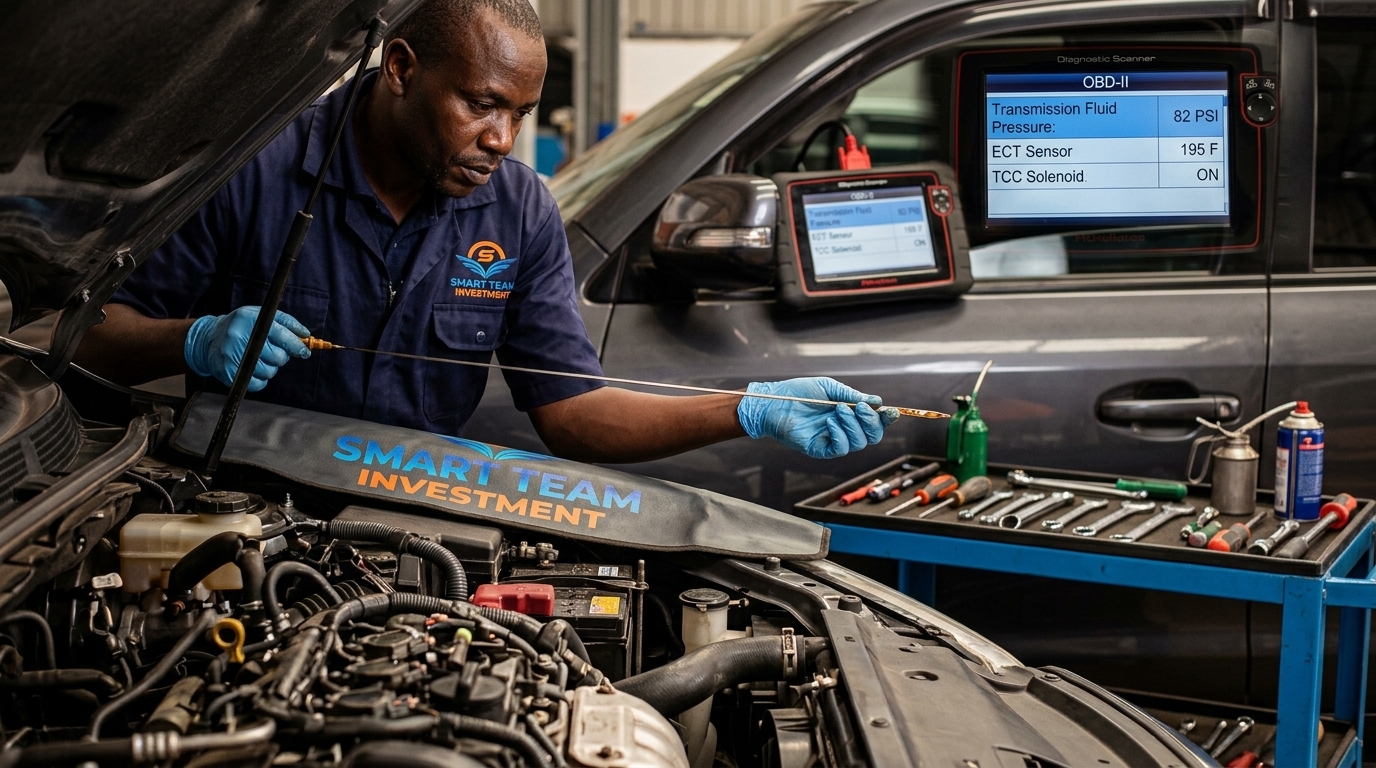
- OBD-II Diagnostic Scan: Request an electronic scanner check via the vehicle’s OBD-II port. This uncovers cleared check engine light codes, sensor failures, and hidden transmission fault history.
- Under-Engine Fluid Leak Check: Look underneath after idling 10 minutes — dark oil or red/pink transmission fluid pools = expensive seals. Cold-start rattle 3 seconds = timing chain/tensioners. P→D and P→R should engage <1 second smooth; harsh thunk or 3-sec delay = valve body wear; accelerate up incline — revs 4,000 RPM but barely moves = slipping CVT. Timing belt >100k km without sticker = KSh 15k–35k immediate.
5. Hidden Rust & Accident Damage: Uncovering the Import's Past
Approximately 1 in 10 imported used cars has had its odometer rolled back, and over 35% have suffered past accident repairs or saltwater rust in Japanese storage yards prior to shipment to Mombasa.
Import verification agencies like QISJ Inspection and KEBS Kenya conduct roadworthiness checks at origin ports, but these certificates do not guarantee that a car has never suffered body repairs or structural frame alignment issues. Always cross-verify with NTSA TIMS (opens in new tab).
Collision & Corrosion Inspection Steps
- Paint Consistency: Inspect the vehicle in broad daylight. Look along the side panels for uneven paint reflection, overspray on rubber door seals, or slight color mismatches between adjacent doors and fenders.
- Structural Weld Inspection: Open the hood and trunk. Inspect the inner fender wells, strut towers, and radiator support frame. Original factory spot welds are smooth and uniform; crude, uneven welds or fresh undercoating paint indicate major front-end collision repairs.
- Undercarriage Corrosion: Inspect the floor pan, frame rails, and exhaust system underneath for deep flaking rust. Vehicles imported from coastal regions or flooded areas suffer severe structural rust.
- Japanese Auction Sheet Verification: For foreign imports, insist on seeing the original Japanese Auction Sheet. Target cars graded Grade 4 or higher. Avoid Grade 3 (heavy wear/scratches), Grade R/RA (accident repair history), or cars marked with 冠水 (Flood Damage).
- Spot Weld Inspection: Open bonnet/boot, inner fender wells, strut towers, radiator support — uniform round indentations = factory; smooth filler/uneven welds/fresh undercoating = crash repair. Underbody Rust: Hokkaido snow salt rust on floor pans/exhaust/suspension.
| Auction Grade | Condition Summary | Buying Recommendation |
|---|---|---|
| Grade 5 - 6 | Like-new / Extremely low mileage | Premium Choice (High Value) |
| Grade 4.5 | Excellent condition, minimal wear | Top Recommended Grade |
| Grade 4.0 | Good condition, minor blemishes | Standard Quality Import |
| Grade 3.5 | Moderate wear, visible scratches | Inspect Carefully Before Buy |
| Grade R / RA | Repaired Accident Damage | High Risk (Requires Audit) |
| Flood Mark | Water Immersion / Flood Damage | ABSOLUTE WALK-AWAY (Do Not Buy) |
*Grades verified via QISJ and auction translators. For valuation impact, see How Vehicle Valuation Affects Your Loan Limit in Kenya.*
The 10-Minute Pre-Purchase Walkaround Checklist
Use this quick summary table when evaluating a car at a dealer yard:
| Mechanical Area | Cold Inspection Check | Test Drive Verification | Pass Condition |
|---|---|---|---|
| 1. Cooling | Coolant clean; hoses firm; no milky oil residue | Gauge stays centered; heater works; no sweet smell | Temp normal; no leaks |
| 2. Suspension | Shock bounce test <=2 rebounds; no shock oil leaks | Silent over potholes; no pulling or steering play | Smooth, quiet ride |
| 3. Brakes | Pedal firm; pads >=4mm; rotor smooth | No grinding, squealing, or pedal vibration | Quick, straight stops |
| 4. Engine/Gear | Clean cold start; no oil pools underneath | Smooth gear shifts; no exhaust smoke (blue/white) | Responsive power |
| 5. Body/Rust | Uniform paint finish; original chassis spot welds | Straight tracking; silent CV joints on full lock | Verified auction sheet |
> Print or screenshot this checklist — take it to the yard and fail any car that misses a Pass Condition. The cheapest insurance is a KSh 3,000–5,000 independent inspection.
*Negotiation Lever: Turn faults into cash slices — see next section.*
The Secret Negotiation Lever: Turn Faults Into Cash Slices
Discovering a defect during an inspection is not always a reason to panic—it is your strongest price-negotiation tool.
If an independent inspection uncovers worn brake pads, dead shock absorbers, or tires due for replacement:
- Obtain an itemized repair estimate from a reputable garage (e.g., KSh 45,000 for full suspension overhaul).
- Present the written report to the car yard owner or dealer.
- Demand a direct KSh 50,000 to KSh 100,000 reduction off the asking price before signing the sale agreement.
Dealerships facing an active, financed buyer would far rather cut their price by KSh 60,000 than lose a sale and continue paying KSh 2,300/day in yard holding costs!
*See valuation leverage: How Vehicle Valuation Affects Your Loan Limit in Kenya — use OMV to force discount vs repair estimate.*
Claim Your Free Pre-Purchase Mechanical & Document Audit
Submitting loan paperwork or paying car deposits without verifying the vehicle's true mechanical state is a recipe for heartbreak. Protect your money before you commit.
The "Zero-Surprise" Pre-Purchase WhatsApp Audit
We offer a Free 1-on-1 Pre-Purchase Verification for Kenyan car buyers:
- Auction Sheet Translation & Odometer Audit: Send us the chassis number and we’ll pull or verify the authentic Japanese auction sheet (checking for Grade R, flood damage, or clocked mileage).
- Pre-Purchase Mechanic Checklist: We provide an exact 45-point inspection template for your mechanic to take to the yard.
- Valuation & Financing Match: We verify whether your target vehicle meets bank asset-finance criteria (under 8 years, high liquidity, clean NTSA TIMS record).
📲 Claim Your Free Audit on WhatsApp: Send "MECHANICAL AUDIT" or your chassis number / listing link to +254 790 406903.
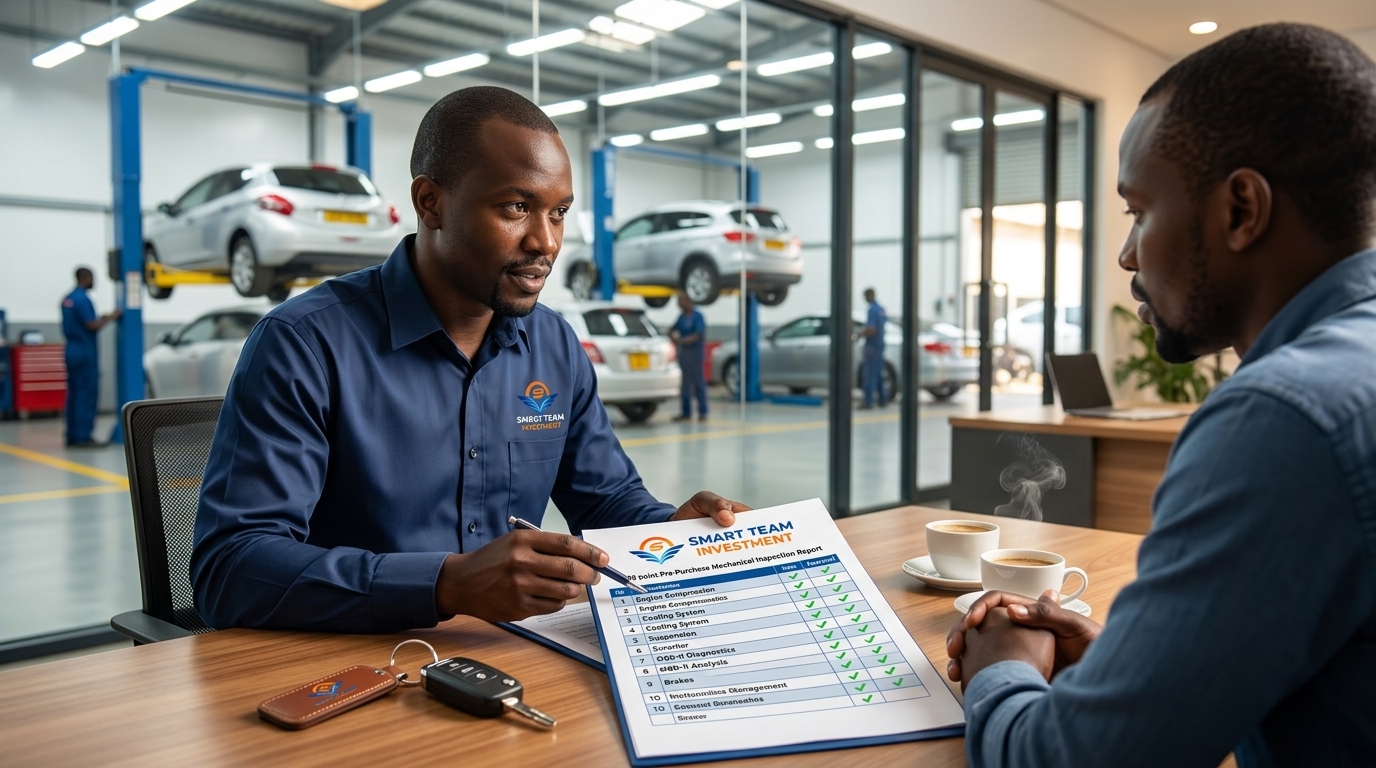
P.S. (TL;DR): Never buy a used car based on sparkling paint and polished tires. Start the engine cold, check for milky oil or white smoke, test the brakes for shudder, demand the original Japanese Auction Sheet (Grade 4.0+), and pay KSh 3,000–5,000 for an independent mechanic inspection before signing any paperwork. An inspection fee is the cheapest insurance policy you will ever buy!
Explore more: How Vehicle Valuation Affects Your Car Loan Limit in Kenya • Hire Purchase vs Bank Loan Kenya: Which Financing Option Wins? • How to Secure Car Asset Financing in Kenya: 7-Step Bank Approval Guide • How Custom Duty Is Calculated for Car Imports • NTSA TIMS & T-Port Logbook Transfer Guide.
Frequently Asked Questions (FAQs)
An independent pre-purchase inspection in Kenya costs between KSh 3,000 and KSh 6,000, depending on whether you hire a mobile mechanic or visit an established motoring center like AA Kenya. A few thousand shillings on a pre-purchase scan is cheap against a single missed head gasket or transmission, though we will not put a figure on the average saving.
Yes. Bank valuers evaluate a vehicle's open market value (OMV) and forced sale value (FSV) based on age, model, body state, and logbook registration. They do not dismantle engine parts, run diagnostic scans, or test drive the car on rough roads to detect internal transmission slip or cooling leaks.
If the car is already in Kenya, text CH# followed by the chassis number to 20023 and KEBS will return the recorded inspection and mileage details for that VIN — that is an SMS service, not a website. If the car is still in Japan, what you need is the original auction sheet and the lot number, verified through your importer. There is no free public database: the Japanese auction houses are members-only and do not publish their inspection data. Cross-check against the door-jamb service stickers, and treat a low reading with no sticker history as unverified rather than as a bargain.
If a seller or car yard owner refuses to allow an independent mechanic to inspect the vehicle, treat it as an immediate red flag and walk away. Reputable dealers in Nairobi and Mombasa welcome independent technical audits.
Always confirm the current requirements on the official NTSA portal before you pay anyone, and keep the payment receipt.
The Pre-Purchase Mechanical Inspection Checklist
The 40-point walkaround to run (or commission) before you commit to a used car in Kenya.
What you will discover inside
- ✓The inspection points that catch the expensive, hidden defects
- ✓What a bank valuation will never check
- ✓Cost expectations for an independent inspection, and what it should cover
- ✓Questions to ask the seller that reveal mechanical history
- ✓How to respond when a seller refuses an independent inspection
Free Download: The Pre-Purchase Mechanical Inspection Checklist
100% free. Delivered instantly to your email and WhatsApp.