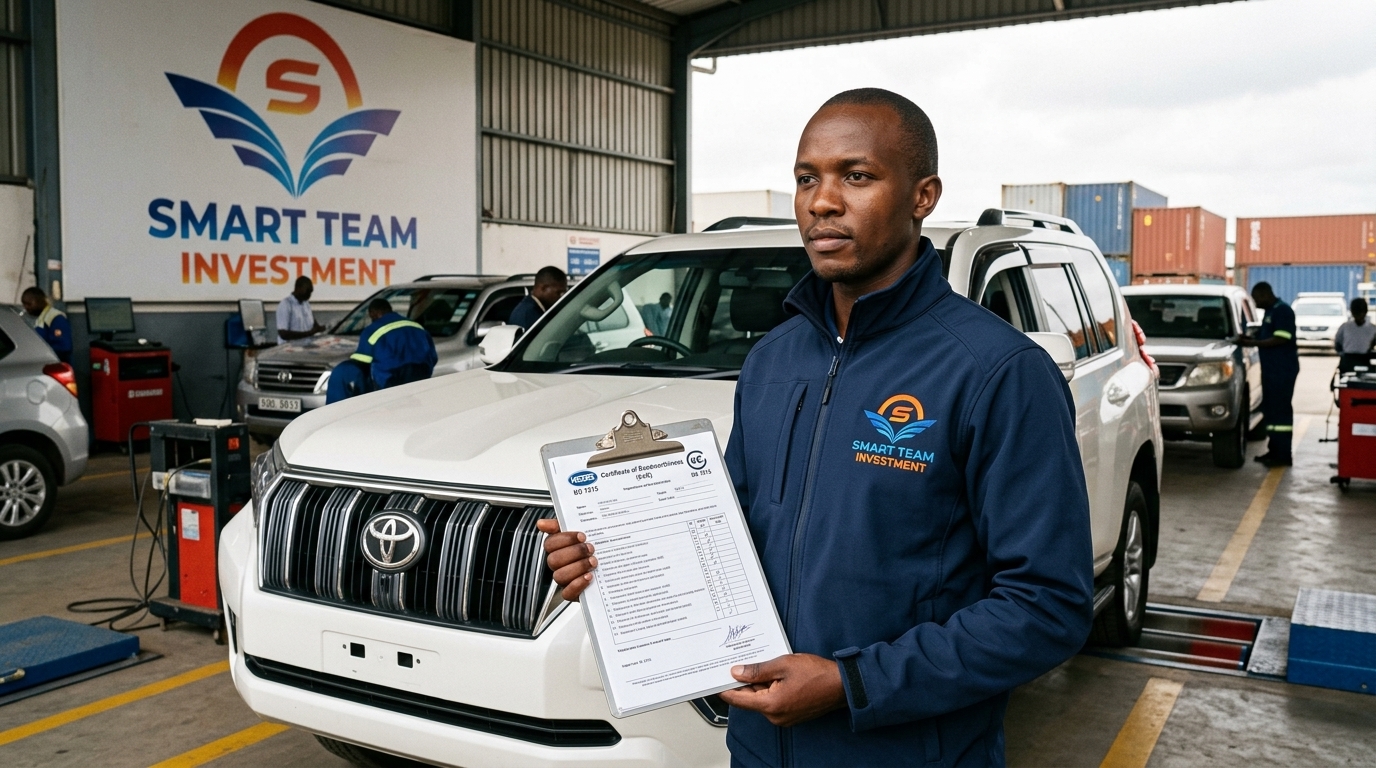
The $250 Line Item That Prevents Port Seizure, Radiation Contamination, and Odometer Fraud
You are sitting at your dining table at 11:00 PM in Nairobi or Mombasa, scrolling through a pro-forma invoice sent by a Japanese car exporter or local import broker. Your eyes scan past the big figures—the FOB auction bid, the ocean freight fee, the marine insurance.
Then, buried near the bottom, six quiet words appear in plain text: "QISJ Pre-Shipment Inspection Fee: $250".
Most Kenyan buyers skim right past it, assuming it is just another boring administrative tax. Big mistake. That line item buys the single most powerful legal protection in the entire vehicle import process.
That six-word line item buys the single most powerful legal protection in the entire vehicle import process. It represents a licensed inspector in Yokohama or Nagoya pulling your car onto a full diagnostic test line to certify it against the Kenya Standard for Inspection of Road Vehicles (KS 1515) before it is legally allowed to board a ship to Mombasa.
Without that certificate, your car does not clear Mombasa port. Instead, it gets trapped in a bureaucratic nightmare: subjected to mandatory Destination Inspection under Legal Notice 78 of 2020, hit with heavy KEBS penalty surcharges, and bled dry by daily port storage and demurrage fees while you watch your hard-earned savings evaporate.
*Note: This guide is Part 5 of our Kenyan Automotive Masterclass. Be sure to read our companion guides on Vehicle Valuation & Bank Loan Limits, Hire Purchase vs Bank Loans, Car Asset Financing, and Top 5 Mechanical Checks.*

3 Critical Checks No Auction Sheet or Photo Will Ever Show You
While the Japanese Auction Sheet evaluates cosmetic grades (Grade 4.0 vs Grade R) and your local mechanic checks the physical car on arrival, the pre-shipment inspection is the official government gatekeeper that tests three vital factors:
- Concrete Roadworthiness (KS 1515 Standard): Tests structural integrity, steering geometry, braking efficiency, tire tread depth, suspension bushings, and exhaust emissions on calibrated test lines.
- Radiation Contamination Test: Every single used vehicle exported from Japan or the UAE to Kenya undergoes mandatory gamma radiation screening—a strict protocol following the 2011 Fukushima nuclear disaster. Vehicles exceeding safety thresholds are immediately barred from export.
- Odometer Integrity Verification: The inspector cross-references the vehicle's physical odometer against Japan’s Automobile Inspection Registration Information Service (AIRIS) historical records to eliminate odometer rollback fraud.
> While the auction sheet evaluates Grade 4.0 vs Grade R, the QISJ line tests what photos hide — see Evaluating Japanese Auction Sheet Grades Kenya and Top 5 Mechanical Checks for Used Cars on Kenyan Roads for the full picture.
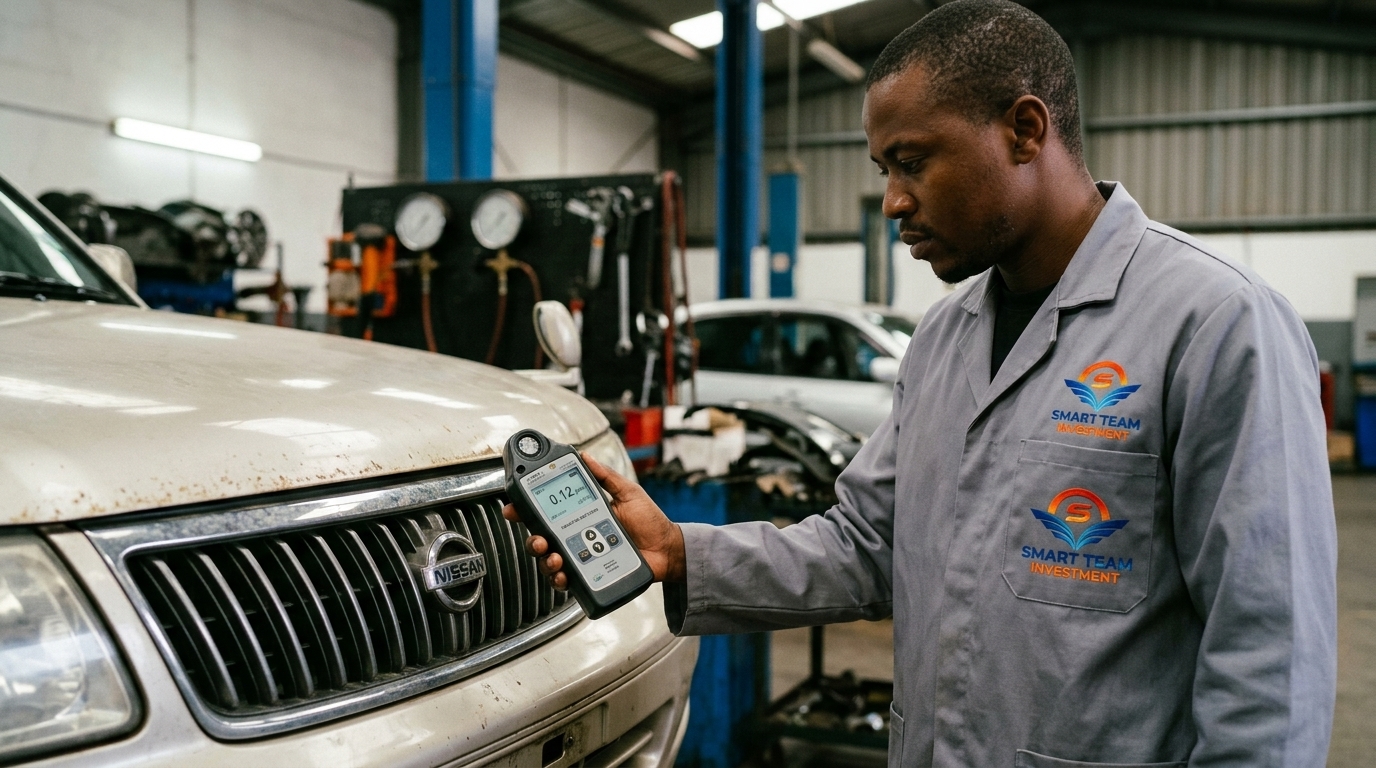
QISJ vs. JEVIC: Demystifying East African Dealer Shorthand
If you have talked to clearing agents or car yard brokers in Nairobi or Mombasa, you have undoubtedly heard them throw around the phrase *"QISJ/JEVIC inspection"* as if it were a single option.
| Inspection Agency | KEBS Appointment Status | Target Export Markets Covered |
|---|---|---|
| Quality Inspection Services Japan (QISJ) | Exclusive Appointed Contractor by KEBS for Kenya imports | Japan, Singapore, UAE, UK, South Africa & Thailand |
| Japan Export Vehicle Inspection Center (JEVIC) | Independent Inspection Body (Not appointed for Kenya motor imports) | Australia, New Zealand, Zambia, and global biosecurity markets |
Under the KEBS Pre-Export Verification of Conformity (PVoC) Manual, KEBS has appointed Quality Inspection Services Japan (QISJ) as the exclusive inspection body for motor vehicles bound for Kenya. The output is an official Certificate of Roadworthiness (CoR). If a clearing agent offers you a choice of inspection companies for a Kenya shipment, verify current guidelines on the official KEBS Import Quality Portal (opens in new tab).
*Why agents say "QISJ/JEVIC": In East African trade vernacular, "QISJ/JEVIC" has become generic shorthand for "the Japanese pre-shipment vehicle check". The Legal Certificate for Kenya is QISJ CoR — KEBS appoints the contractor, not the broker.*
The Hard Legal Gates: The 8-Year Age Rule & The 1-Year Gap Trap
The QISJ inspection strictly enforces Kenya's import compliance rules before a vessel booking is approved:
- The 8-Year Age Limit — and how KEBS actually applies it: KS 1515:2000 clause 2.5 caps imports at 8 years from the year of first registration, enforced through Legal Notice No. 78 of 28 April 2020. The rule is less than 8 years, so a unit that is exactly 8 years old fails: for a 2026 import that means only right-hand-drive vehicles first registered from 1 January 2019 onward may be allowed into the country. Do the subtraction and you will believe 2018 qualifies. It does not.
- The 1-Year Manufacture-to-Registration Gap Rule: The gap between the year of manufacture and the year of first registration must be one year or less.
Manufacture-to-Registration Gap Rule Examples
- PASS Example: Manufactured December 2018, First Registered January 2019 → Clears Legal Age Gate.
- REJECTED Example: Manufactured December 2018, First Registered March 2020 (Gap = 2 Years) → Banned From Kenya Entry.
> Check age via NTSA TIMS Portal and cross-verify chassis before wiring. Also see How Vehicle Valuation Affects Your Loan Limit for post-arrival finance.
QISJ Certificate & 8-Year Age Rule Compliance Checker
Check Kenya import eligibility (2026) before you wire funds
Legal Age Status
PASSED (2019 ≥ 2019)
7 years old in 2026
Manufacture Gap
PASSED (1mo ≤12)
0.1 years gap
Required Agency
Quality Inspection Services Japan (QISJ)
Required Document
Official Certificate of Roadworthiness (CoR)
Port Clearance Risk
LOW RISK
QISJ tests KS 1515 roadworthiness + radiation + AIRIS odometer. A passed CoR is legal entry, not mechanical perfection — still do 5-point mechanical check on arrival.
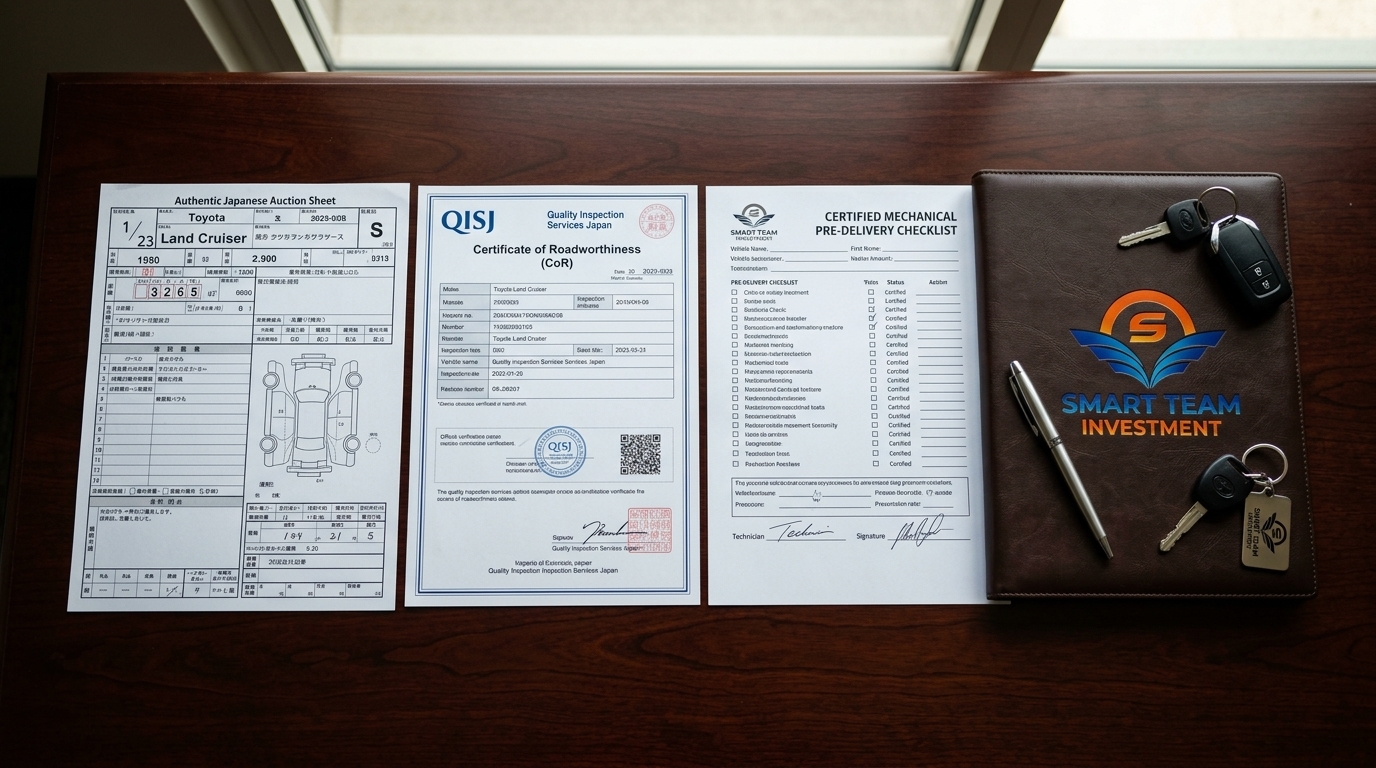
The Three-Document Documentation Trinity
Do not confuse the QISJ Certificate of Roadworthiness with other automotive paperwork. Successful importers rely on a three-tier documentation strategy:
| Document Name | Author / Issuer | Core Purpose & Scope |
|---|---|---|
| Japanese Auction Sheet | Independent Japanese Auction House | Evaluates cosmetic condition, body scratches, interior grade & repair history |
| QISJ CoR Certificate | KEBS-Appointed Inspector (Japan) | Certifies legal roadworthiness under KS 1515, radiation clearance & mileage verification |
| Mechanic Inspection Report | Trusted Local Kenyan Mechanic | Assesses actual mechanical health, engine compression & gearbox performance upon arrival |
*For mechanical depth, see Top 5 Mechanical Checks for Used Cars on Kenyan Roads and auction decoding: Evaluating Japanese Auction Sheet Grades Kenya.*
New for 2026: Traffic (Motor Vehicle Inspection) Rules
On 1 July 2026, Kenya’s Traffic (Motor Vehicle Inspection) Rules, 2026 (Legal Notice 13 of 2026) officially came into force.
These rules introduce mandatory domestic inspection stickers, licensed private inspection centers across Kenya, and explicitly ground domestic periodic testing in KS 1515—the exact same standard your QISJ CoR was evaluated against in Japan. A car that genuinely passed QISJ in Tokyo will glide through domestic NTSA inspection in Nairobi, Mombasa, or Kisumu.
*What this means for you:* A car that genuinely passed QISJ on safety and emissions in Tokyo will glide through domestic NTSA inspection. A car pushed through with worn brakes or faulty steering will quickly fail domestic testing, costing you thousands in emergency repairs.
> Verify domestic rules via KEBS and QISJ Inspection Services (opens in new tab).
What the QISJ Certificate Does NOT Certify (Honest Limits)
While the QISJ CoR is essential for legal entry, it is not a guarantee of total mechanical perfection. A car can legally pass QISJ inspection and still:
- Hide internal engine wear, clutch slippage, or CVT gearbox degradation that does not trigger an immediate safety line failure.
- Contain cosmetic imperfections, worn seat fabric, or minor body dints that are ignored by roadworthiness standards but affect retail value.
- Have suffered previous minor body panel repaints that do not compromise structural safety.
This is why you must combine the QISJ CoR with the Japanese Auction Sheet and an Independent Mechanic Audit. See Evaluating Japanese Auction Sheet Grades Kenya and Top 5 Mechanical Checks.
Your 5-Step Pre-Shipment Audit Checklist
Before wiring funds for a foreign car import, follow these five non-negotiable steps:
- Demand the Chassis Number & CoR: Ask the exporter for the exact chassis number and the QISJ CoR issued for that specific chassis.
- Verify the Age & Gap Rules: Confirm the vehicle's first registration date is 2019 or newer for a 2026 import, and that the manufacture-to-registration gap is ≤ 1 year. The rule is less than 8 years, not 8 or fewer, so for a 2026 import only units first registered from 1 January 2019 are admitted.
- Cross-Check Odometer Reading: Compare the mileage on the QISJ CoR with both the Japanese Auction Sheet and the physical speedometer cluster.
- Insist on CIF Terms: Ensure your invoice explicitly states CIF Mombasa (Cost, Insurance, Freight) so pre-shipment inspection and marine insurance are fully covered.
- Book Your Arrival Audit: Have an independent mechanic inspect the vehicle upon arrival in Kenya before finalizing registration and driving off.
> Use the calculator above to test your Jan 2019 vs Mar 2020 gap before you pay deposit.
Claim Your Free Pre-Wire QISJ & Chassis Audit
Do not gamble your life savings on unverified invoice line items or missing certificates. Send us your vehicle’s chassis number, auction link, or pro-forma invoice, and our team will perform a Free 1-on-1 Pre-Wire QISJ & Port Compliance Audit.
- QISJ & KEBS Certificate Authentication: Verification of official CoR records and chassis matching.
- 8-Year Rule & Manufacture Gap Audit: Guaranteed verification against KS 1515 age rules to eliminate port seizure risk.
- AIRIS Odometer & Auction Sheet Verification: Cross-checking Japanese historical records to catch rollback fraud.
WhatsApp Us Now: Send "QISJ AUDIT" + your chassis number to +254 790 406903 for an instant verification report.
*Also explore: How to Secure Car Asset Financing in Kenya: 7-Step Bank Approval Guide for financing after CoR.*

Frequently Asked Questions (FAQs)
The vehicle is held for destination inspection under Legal Notice 78 of 2020. Beyond the delay, KEBS can apply a penalty of 15% of CIF value on top of demurrage and storage charges that accrue while the unit sits, so the certificate is far cheaper to arrange before shipment than to resolve after the vessel docks.
Yes. QISJ applies to vehicles sourced from Japan, the UAE, the UK, Singapore, South Africa and Thailand — so a unit shipped from Dubai or the UK still needs the certificate before it can be released.
Scan the QR code printed on the certificate, or enter the chassis number directly on the QISJ portal. Confirm that the chassis number on the certificate matches the number on the vehicle itself and on your import documents — a certificate for a different chassis is the most common way a forged document slips through.
Always confirm the current requirements on the official NTSA portal before you pay anyone, and keep the payment receipt.
The QISJ / JEVIC Import Inspection Requirements Sheet
What the inspection covers, what it does not, and how to read your own report line by line.
What you will discover inside
- ✓What QISJ inspects, and how the former JEVIC business fits into it today
- ✓The report sections that decide whether your car is accepted or flagged
- ✓The age-limit bands and how they map to your model year
- ✓What the inspection does NOT prove (auction grade, odometer, cosmetics)
- ✓How to challenge or clarify a flagged item before it becomes a rejection
Free Download: The QISJ / JEVIC Import Inspection Requirements Sheet
100% free. Delivered instantly to your email and WhatsApp.